Two of the most effective hands-on techniques for releasing stubborn muscle tension, accelerating recovery, and getting you back to peak performance, delivered by Dr. Caleb Kutsche, PT, DPT, OCS, CSCS.
Schedule your free consultationDry needling is a highly targeted technique that uses thin, sterile filiform needles to penetrate tight muscle bands, known as trigger points, to release tension, reduce pain, and restore normal muscle function. Unlike acupuncture, which is rooted in traditional Chinese medicine, dry needling is firmly grounded in Western orthopedic and neuroanatomical science.
When a needle is inserted into a trigger point, it produces a localized twitch response, a brief, involuntary contraction that resets the muscle fiber. This triggers a cascade of healing responses: increased blood flow, reduced local inflammation, and a reset of the neuromuscular system that has been keeping that muscle locked tight.
Dr. Caleb identifies the problem areas through a thorough movement assessment, then precisely places needles into the targeted tissue. Most sessions last 10–20 minutes of needle time. You may feel a brief cramp or twitch, that's the muscle releasing. Soreness for 24–48 hours is normal and is a sign the tissue is responding. Many patients feel immediate improvement in range of motion and pain levels.
Schedule your free consultation
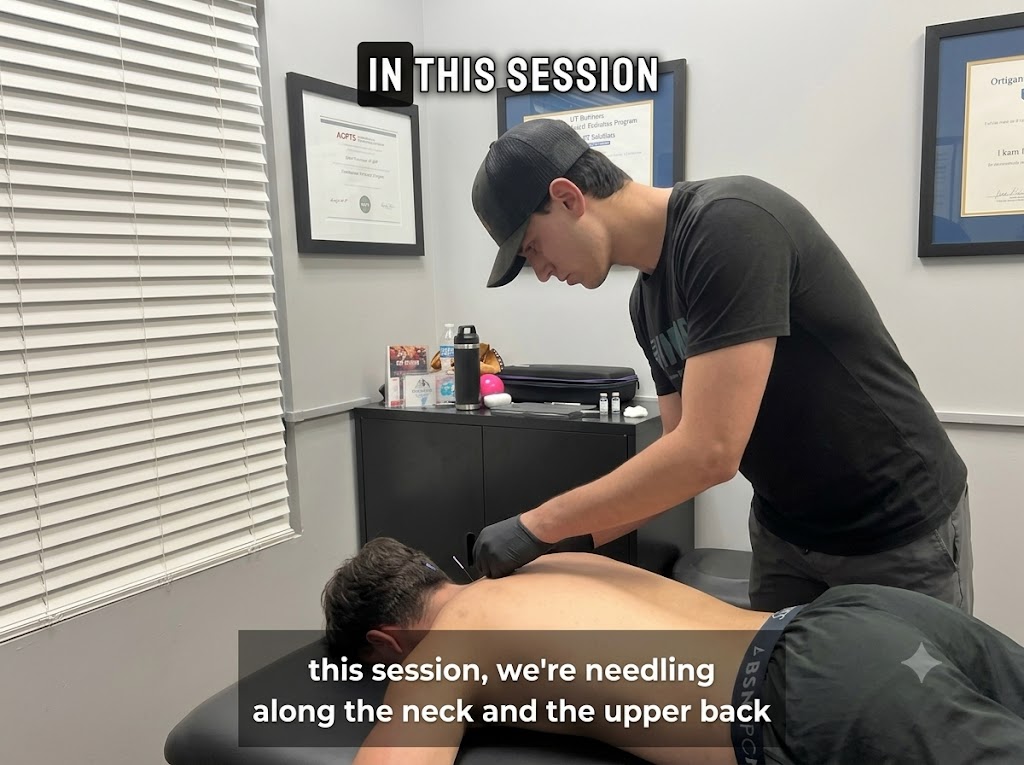
Precise needle placement into tight muscle bands to reset neuromuscular tension at the source.
Many patients experience immediate reduction in pain and improved range of motion after just one session.
The needles are extremely thin — most patients feel only a brief twitch response, not pain. Soreness for a day or two is normal.
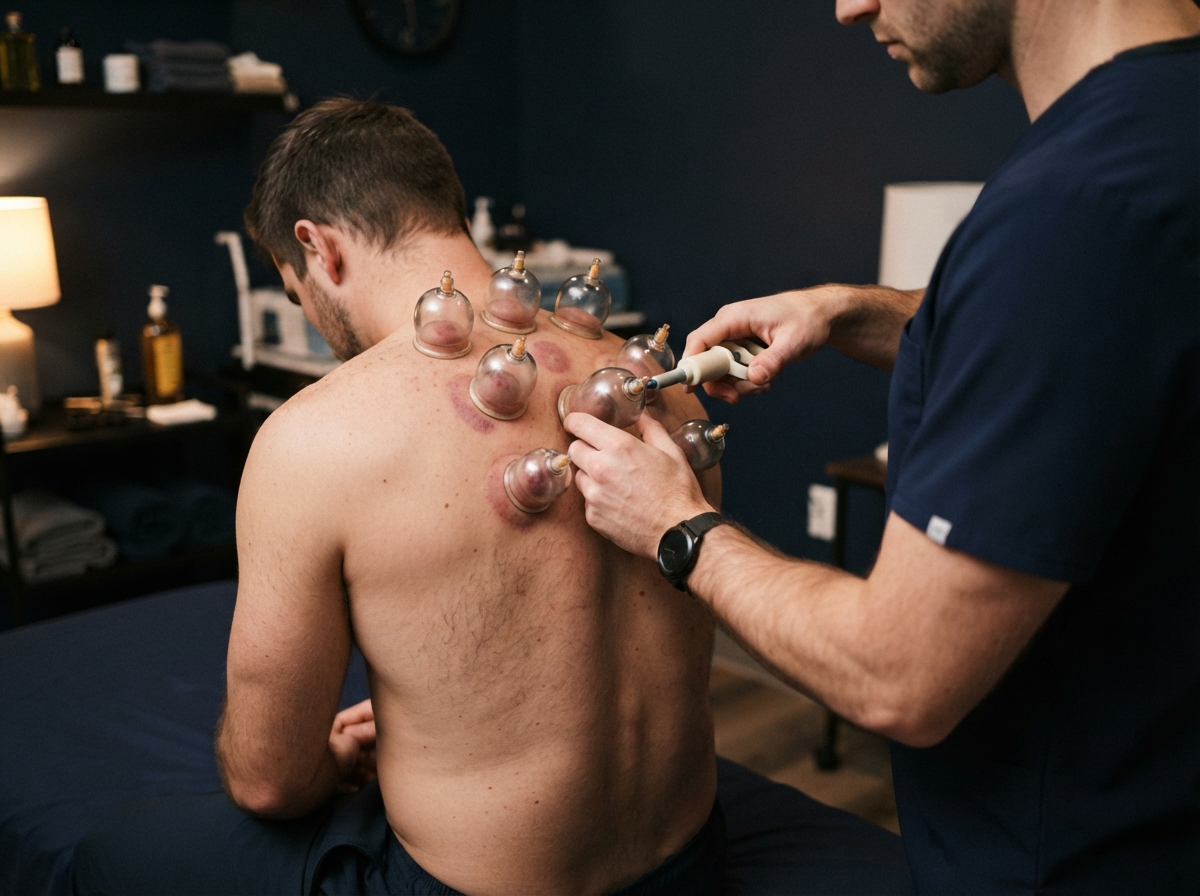
Cupping is a manual therapy technique that uses specialized cups placed on the skin to create negative pressure, a gentle suction that lifts the tissue layers apart. This decompression improves blood flow, releases fascial restrictions, and promotes healing in tissues that have been compressed or restricted for too long.
Where most soft tissue work pushes and compresses (like massage), cupping pulls and decompresses. The suction draws blood to the area, separates adhered tissue layers, and stimulates the body's natural healing response. Dr. Caleb uses both static cupping (cups left in place) and dynamic cupping (cups glided across the tissue with movement) depending on your needs.
Cups are applied to the target area for 5–15 minutes, or moved dynamically along the muscle. You'll feel a tight pulling sensation, not painful, but unmistakable. The characteristic circular marks left behind are not bruises, they are decompression marks that fade in 3–7 days. Most patients feel looser, lighter, and more mobile immediately after treatment.
Schedule your free consultation
Image for illustrative purposes
Gentle suction lifts and separates tissue layers where compression techniques can't reach.
Increased blood flow flushes metabolic waste and delivers oxygen-rich blood to speed healing.
Releases fascial restrictions and adhesions for immediate gains in range of motion and movement quality.
Dr. Caleb is a Board-Certified Orthopedic Clinical Specialist (OCS), Certified Strength and Conditioning Specialist (CSCS), and Dry Needling Certified, meaning your treatment is delivered by a clinician with advanced orthopedic expertise, not a weekend course.
You're never handed off to an aide or bounced between providers. Every session is 1-on-1 with Dr. Caleb for the full duration, so your treatment is precise, personalized, and dialed in to your exact needs that day.
Dry needling and cupping aren't standalone magic, they're powerful tools within a complete treatment plan. Dr. Caleb integrates them with movement correction, strength work, and performance training so the results stick, not just feel good for a day.
As a CSCS and sports PT, Dr. Caleb understands the demands of training and competition. Needling and cupping are timed and targeted around your sport schedule, releasing what's tight without compromising what needs to perform.
Schedule a free 30-minute evaluation with Dr. Caleb to see if dry needling or cupping is right for you.