Today I want to talk about what we look for during an arm care assessment for baseball and softball players.
One of the first questions I ask is whether the athlete has any pain.
- Is there pain in the shoulder or elbow while throwing?
- Does it hurt during weight training?
- Does it hurt at rest?
These answers help direct the rest of the evaluation. If an athlete is already experiencing pain, we may need to spend more time examining a specific area before moving on to performance testing.
If there is no pain, we typically begin by assessing range of motion.
Shoulder Range of Motion
At the shoulder, I typically evaluate:
- External rotation
- Internal rotation
- Shoulder flexion
- Horizontal adduction
External Rotation
External rotation is one of the most important measurements for overhead athletes. There is not one perfect number that every athlete should achieve, but most healthy baseball players will demonstrate somewhere between 115 and 130 degrees of external rotation in their throwing shoulder.
Internal Rotation
For internal rotation, I generally like to see approximately 60 degrees. While this number is important, what matters even more is the total arc of motion — the sum of external and internal rotation. A significant loss of total arc compared to the non-throwing shoulder can be a red flag.
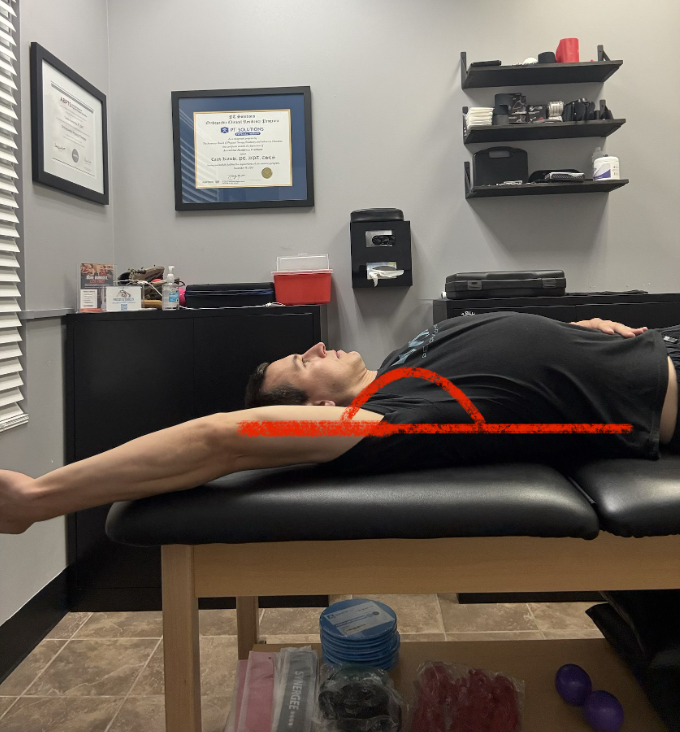
Shoulder Flexion
Next, I assess shoulder flexion. This simply refers to how high an athlete can raise their arm straight overhead. Ideally, I would like this measurement to approach 180 degrees. Many baseball players demonstrate slight limitations here because of the repetitive adaptations that occur with throwing. Softball players often have closer to full shoulder flexion, although that is not always the case.
Elbow Range of Motion
At the elbow, I assess flexion and extension, as well as carrying angle. Throwing athletes often develop slight elbow extension deficits, and significant changes can indicate underlying issues that need to be addressed.
Why Does All of This Matter?
By identifying these changes early, we can address them with targeted mobility work, strengthening exercises, and adjustments to throwing volume before they develop into a more significant problem.
If you'd like to learn more about our arm care assessments, I'd love to speak with you over a free phone consultation.
— Dr. Caleb