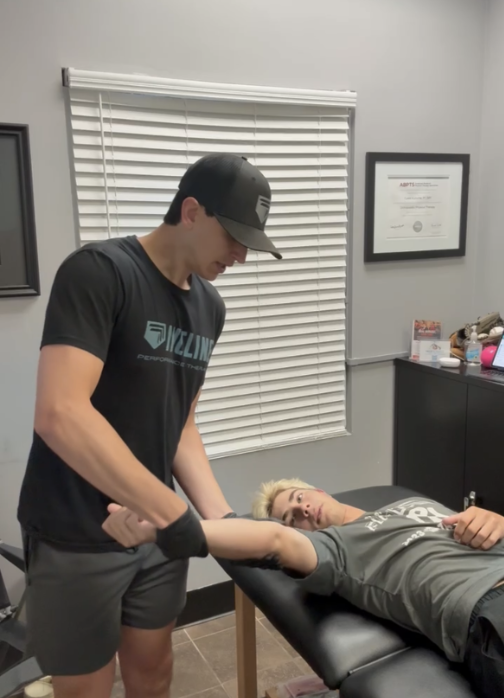
The ulnar collateral ligament (UCL) is one of the most commonly injured structures in throwing athletes. When a pitcher or overhead athlete comes in with medial elbow pain, we need to determine whether the UCL is compromised.
The Valgus Stress Test
The valgus stress test is one of the most common ways to assess the UCL. For this test, the athlete lies on their back while the examiner stabilizes the upper arm and applies a valgus force to the elbow at approximately 20-30 degrees of flexion. This position isolates the UCL and allows us to assess the amount of laxity compared to the uninjured side.
Other Clinical Tests
Moving Valgus Stress Test
The moving valgus stress test reproduces the mechanism of injury by applying a valgus load while the elbow moves from flexion to extension. A positive test reproduces the patient's pain at around 70-120 degrees of flexion — the same range where the arm experiences maximum valgus torque during throwing.
Milk Test
The milk test is performed with the arm in shoulder abduction and external rotation. The examiner applies a valgus stress while the elbow is flexed. Pain or apprehension indicates UCL involvement.
What These Tests Tell Us
No single test is definitive. We look at the combination of clinical tests, the athlete's history, and their symptoms to build a complete picture. If we suspect a significant UCL injury, we may recommend further imaging.
If you're experiencing elbow pain during throwing, don't wait. Book a free phone consultation and let's figure out what's going on.
— Dr. Caleb